 by
by Plant names are significant in the Bible. If the author of a book decides to mention a plant by name, not just tree, or grass, or branch, there must be a reason. One example that is precious to me is found in Genesis 21:33. It is the only place in the Bible where it is written that Abraham planted something: Then Abraham planted a tamarisk tree at Beersheba, and there he worshipped the Lord, the Eternal God. Did I ever notice this verse before? Did I ever wonder what a tamarisk was? Did I ever think it significant that Abraham chose to plant a tree, this tree in particular? Not really.
Abraham was from Ur, in Babylon. Together with his wife, his father and Lot, they move to Haran, towards Canaan. That is where God speaks to Abraham: Leave your native country, your relatives, and your father’s family, and go to the land that I will show you. I will make you into a great nation. I will bless you and make you famous, and you will be a blessing to others. I will bless those who bless you and curse those who treat you with contempt. All the families on earth will be blessed through you. (Genesis 12:1-3)
So, Abraham leaves Haran together with his wife and with Lot. He was 75 years old at that time. They settle in various places on their way south, and eventually move to Egypt because of the famine in Canaan.
They were nomads; this means they had flocks and they needed to move around the country to find food for them. They were not farmers who owned land and cultivated plants. The animals needed to be moved around to find food and water.
When they returned from Egypt, their flocks were so numerous that they could no longer live together. Lot went east to the Jordan valley and Abraham remained in the country. That is when God made another promise: Look as far as you can see in every direction – north and south, east and west. I am giving all this land, as far as you can see, to you and your descendants as a permanent possession. And I will give you so many descendants that, like the dust of the earth, they cannot be counted! Go and walk through the land in every direction, for I am giving it to you. (Genesis 13:14-17).
Sometime after Isaac was born, Abraham plants the tamarisk in Beer-Sheva, more than 25 years after Abraham listened to God and moved to Canaan.
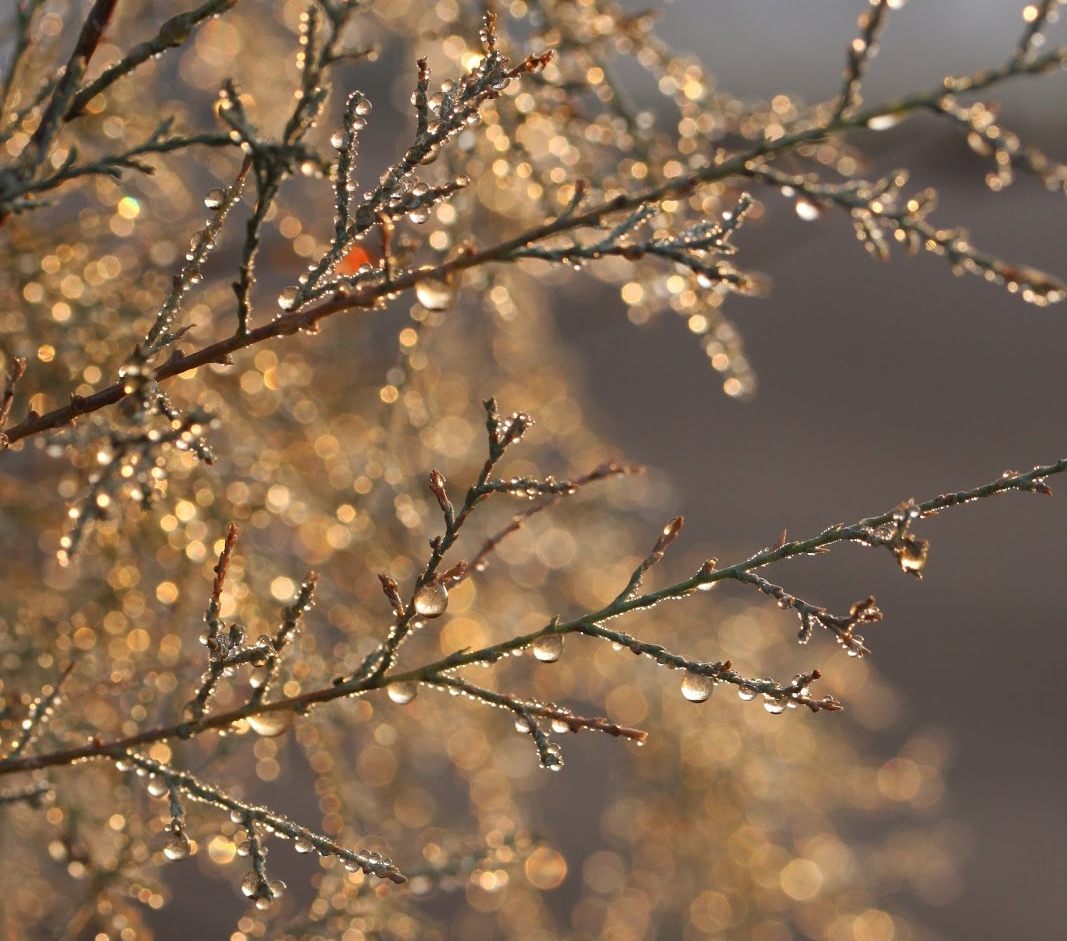
What is this tree that Abraham chose from all other trees? The tamarisk can endure heat and drought. It has the coolest shade of all other trees in that area. Instead of leaves, it has needles, but not the kind a coniferous has. If you lick a small branch, it is salty! Because there are tiny salt crystals on those needles. The salt attracts the vapors in the humid air of the night, which turn into droplets. When the morning heat comes, the droplets evaporate and cool the branches of the tree.
Abraham did not plant just any tree in Beer-Sheva. He chose the one whose shade is cooler than any other. He did this having the future in mind. It was a sign of being a good host who has a place where he can welcome his guests, a sign of having settled in the land. It was an act of faith – based on God’s promise for him and his descendants, who would own the land.
[Photo by M. Manning via floweringjordan.blogspot.com]